





Published Sep 3, 2016
NASA Beams Aboard Mission New York
NASA Beams Aboard Mission New York
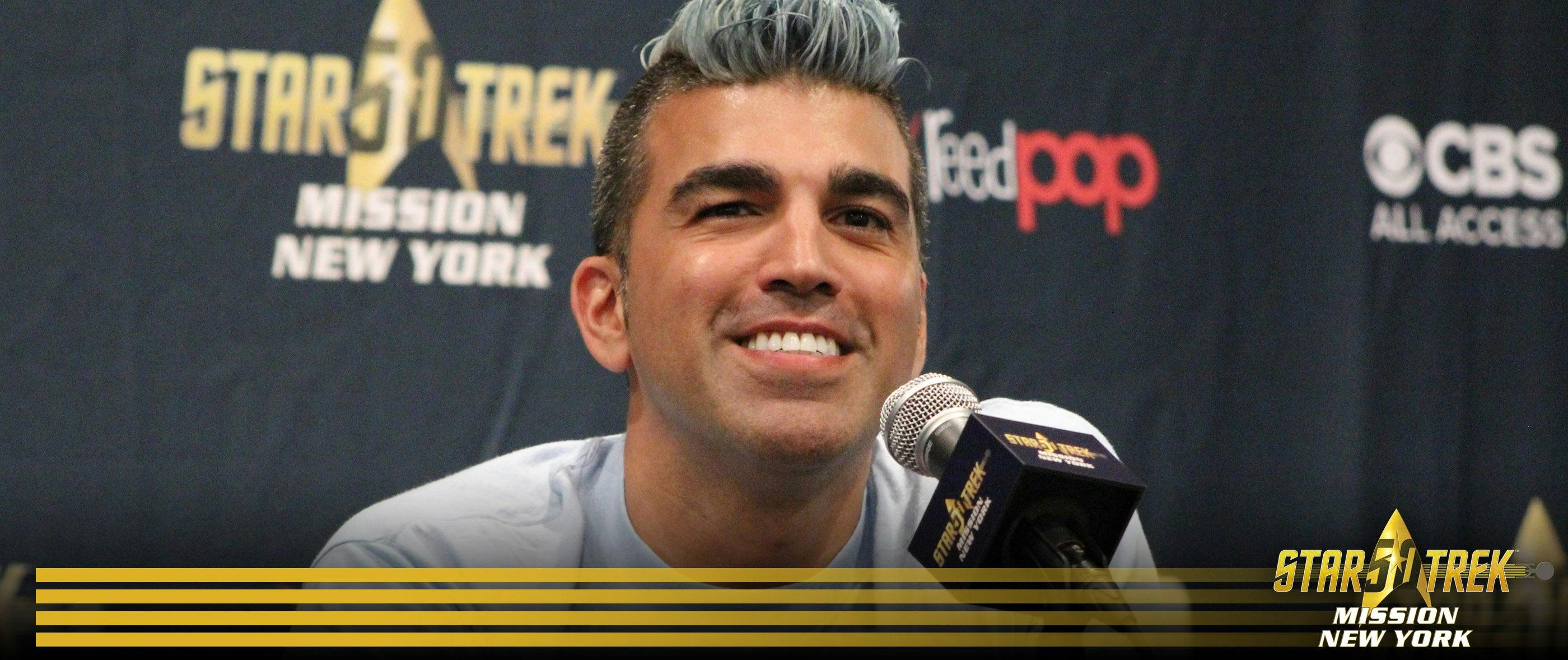
Sci-Fi and Star Trek found a happy medium at Mission New York on Saturday, as NASA played a key role in three panels during the day. First, there was Trek Talks: Ugly Bags of Mostly Water: What Will Aliens Really Be Like? Phil "The Bad Astronomer" Plait hosted, leading an enlightening conversation with NASA's colorful Bobak "Mohawk Guy" Ferdowsi.
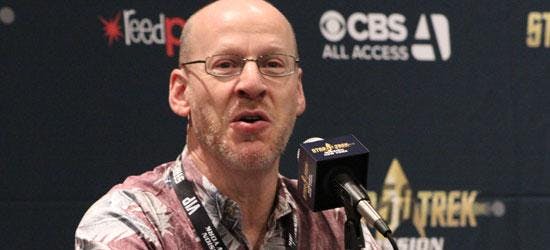
"I'm proud of what NASA is doing because they're throwing cars on Mars, which had the potential for life maybe even before Earth did," Plait said. "Life on Earth didn't take long. And life on Mars is possible."
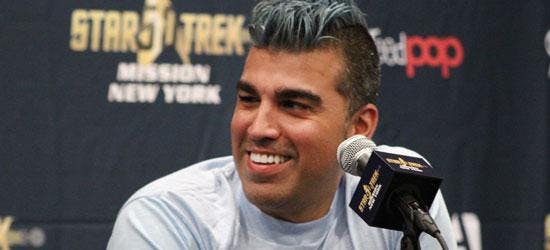
As for those of us on the Big Blue Marble, Ferdowsi noted, "On Earth, people don't think of things that are indicative of life. There are all these things that are evidence of life. And if you look for clues, you can find life."
Next there was Trek Talks: The Science of Exoplanets, featuring comments from NASA team members involved with the upcoming Transiting Exoplanet Survey Satellite (TESS). On hand were Matt Ritsko, Jeff Volosin and Elisa Quintana.
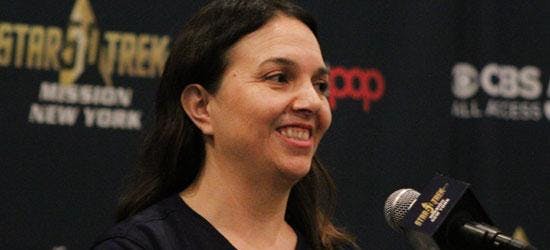
"I made the mistake of saying I had never watched Star Trek," Quintana said, "so I got an intervention and watched Star Trek every Friday since."
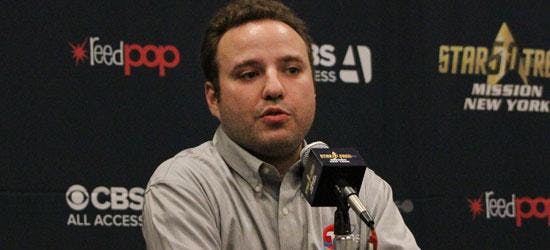
"That's our pale blue dot...," Ritsko said of Earth. "(It's) the only place we know of that has life in the vastness and blackness of space."
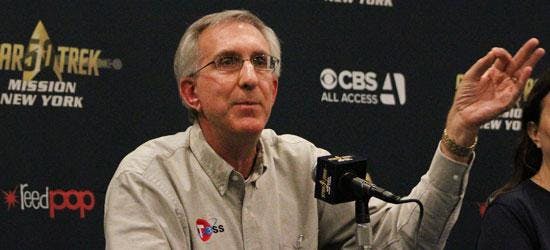
"This is done from Earth," Volosin explained. "You don't have to go into space to do radial velocity work, to find a big exoplanet near a star."
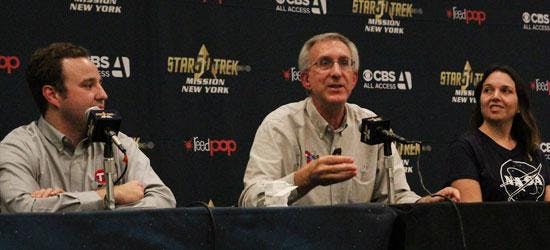
"Matt and I are working on satellites now like Elisa did with Kepler," Volosin added. "We are trying to capture every photon of light. We turn the photons into electrons."
And lastly, fans settled in for the panel Trek Talks: Is There Anybody Out There? Dan Werthimer, Berkeley SETI Research Center Chief scientist, explained the rationale behind past and future searches for other intelligent life in the universe.
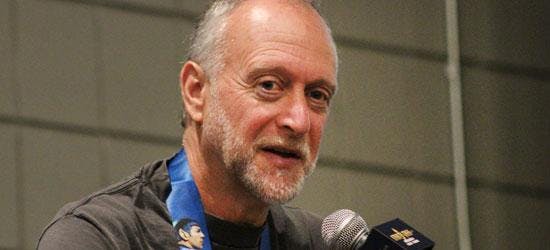
"This question of 'Are we alone?' touches on biology, chemistry, evolution...," he said. "It's a good way to get kids involved in science."
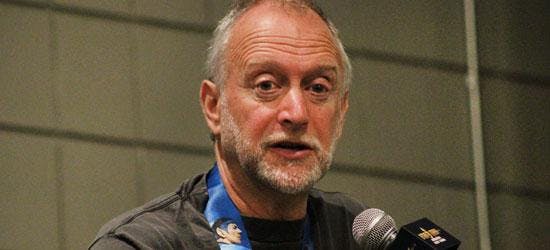
"We haven't gotten ET yet, but I'm optimistic," he noted. "Earthlings just got in the game. Technology is changing."
Actually, NASA's presence at Mission New York extended beyond the panels, as they occupy a huge space on the floor in the North Hall.
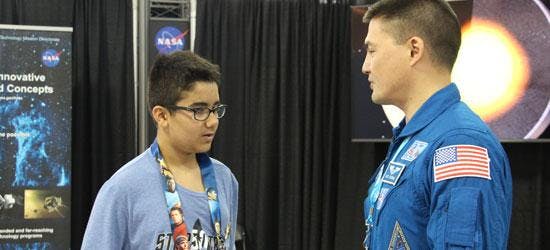
There, visitors can check out exhibits (NASA Innovative Advanced Concepts, High Performance EVA Gloves), learn more about TESS and the X-15 Hypersonic research airplane, and pose for photo against space-themed backgrounds and in an astronaut's spacesuit.
NASA will present three additional panels on Sunday including a main stage event moderated by Robert Picardo (Star Trek: Voyager) with Kjell Lindgren (NASA Astronaut), Michelle Taller (Deputy Director of Science Communications), Dave Lavery (Program Executive for Solar System Exploration) and Jeffrey Sheehy (Senior Technical Officer).